


Gemstone Analysis with LIBS
Unlocking the Secrets of Gemstones with LTB’s Laser-Induced Breakdown Spectroscopy (LIBS)
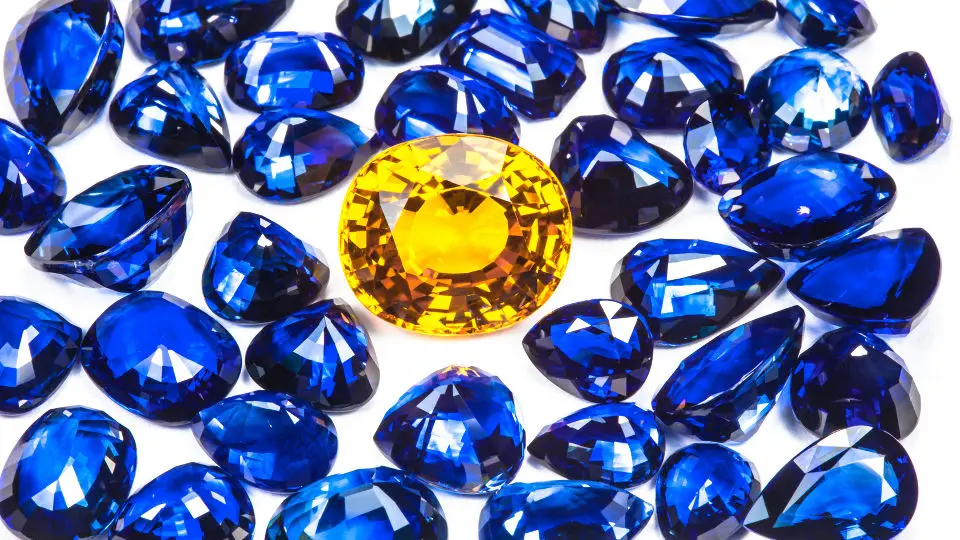
Gemstones have captivated humanity for centuries with their vibrant colours, unique properties, and inherent rarity. But how can we truly understand their composition and verify their authenticity? At LTB Lasertechnik Berlin GmbH, we offer cutting-edge Laser-Induced Breakdown Spectroscopy (LIBS) solutions, a powerful technique revolutionising gemstone analysis.
Why using LIBS for Gemstones?
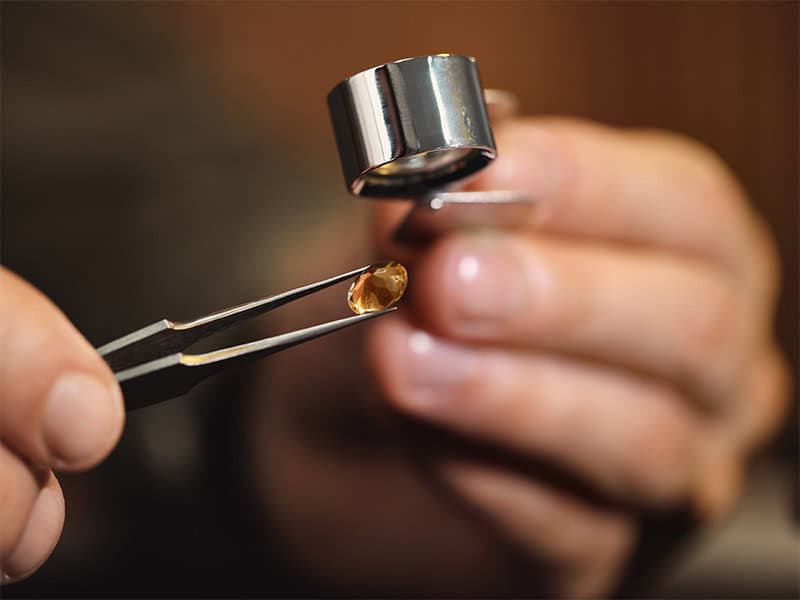
LIBS is an (almost) non-destructive analytical technique that uses a high-energy laser pulse to vaporise a tiny portion of a gemstone’s surface. This creates a plasma plume that emits light, containing invaluable information about the gemstone’s elemental composition. By analysing this emitted light with our advanced Echelle spectrometers, gemmologists can uncover the hidden secrets within each precious gem. Ps: No need to worry, as the area of interaction between laser and gemstone is tiny it can be easily polished afterwards.
LIBS significantly aids in the scientific research and classification of gemstones. By studying the elemental composition across different gem types, researchers can deepen their understanding of gem formation processes and build extensive databases for future reference.
How LIBS Empowers Gemstone Analysis:
Authenticity Verification: LIBS enables gemmologists and jewellers to quickly determine if a gemstone is genuine or an imitation. By examining the elemental composition, LIBS can identify characteristic signatures unique to specific gem types.
Origin Determination: Gemstones from different regions often exhibit distinct elemental profiles due to variations in geological conditions. LIBS helps trace a gemstone’s origin by comparing its elemental fingerprint with known reference databases.
The Challenge of Beryllium Diffusion in Sapphires – Solved by LTB
Quality and Purity Assessment: LIBS provides valuable insights into the quality and purity of gemstones. By quantifying the presence of impurities, such as trace elements or colour-altering elements, gemmologists can assess a gemstone’s value and desirability.
Treatment Detection: Many gemstones undergo treatments to enhance their appearance or alter their properties. LIBS can identify the presence of treatment-induced elements or changes in elemental ratios, helping to determine if a gemstone has been treated or if it is entirely natural.
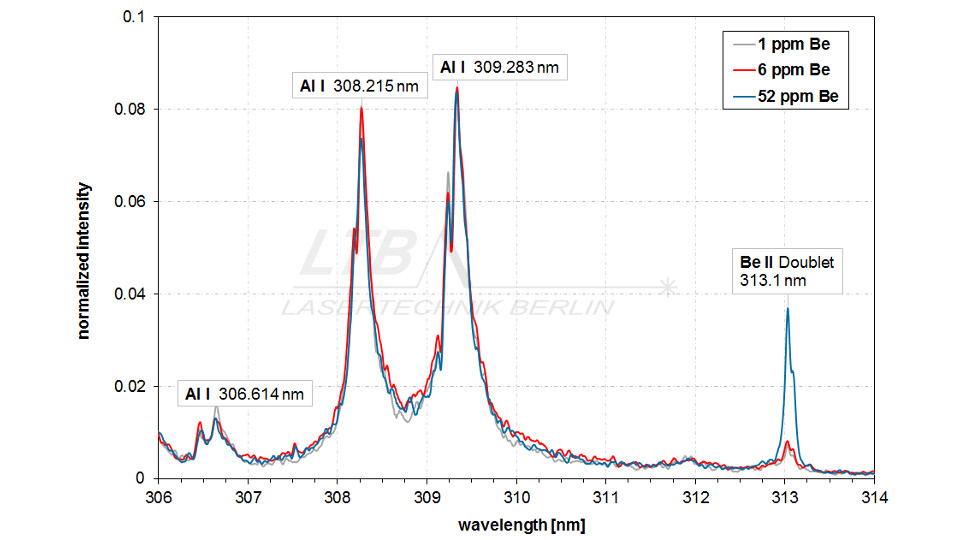
A prime example of LIBS’s unique capability is the detection of Beryllium (Be) diffusion treatment in sapphires. This common method deliberately changes a sapphire’s colour and, consequently, its market value. Dark blue sapphires are often lightened, and a highly sought-after speciality is the rare “Padparadscha” sapphire with its characteristic orange-pink hue. Through artificial beryllium diffusion, an originally pink or orange sapphire can acquire the typical Padparadscha color, making it extremely difficult to distinguish from naturally coloured varieties.
Beryllium is a very light chemical element that most established gemmological analytical methods cannot measure. This is where LTB’s expertise with LIBS comes in.
Introducing the LTB µ-LIBSlab: Your Solution for Beryllium Detection
The LTB µ-LIBSlab is a reliable, LIBS-based measurement system specifically designed for the detection of beryllium diffusion treatment in sapphires. It enables the precise detection of the characteristic beryllium emission line at 313.1 nm (Be II doublet), with sensitivity down to the single-digit parts per million (ppm) range. Laser-Induced Breakdown Spectroscopy (LIBS) is one of the few quasi-non-destructive methods with versatile application areas in gemmology, providing qualitative and quantitative multi-element analysis, especially for light elements with single-digit ppm shares, all without sample preparation.
How Analysis Works with the LTB µ-LIBSlab:
The µ-LIBSlab is a modular LIBS laboratory measurement system for versatile chemical analysis in gemmological laboratories.
Sample Preparation & Positioning: Appart from cleaning and positioning the gemstone in our µ-LIBSlab no other sample preparation is required to ensure accurate results.
Plasma Generation: A focused UV short-pulse laser (266 nm) generates the LIBS plasma. The laser radiation is almost completely absorbed in a very small, surface-near area of the gemstone, creating the plasma plume.
Spectral Analysis: The plasma emits light, which is then collected and analysed using an LTB Aryelle Echelle spectrometer.
Data Interpretation: LTB’s specialised Sophi software processes the collected spectrum, identifying characteristic emission lines associated with specific elements present in the gemstone. Gemmologists interpret these results, comparing them with known spectra and databases to determine the gemstone’s composition, authenticity, and quality.
Understanding Limitations:
While incredibly powerful for this application, it’s also important to note some inherent aspects of LIBS analysis:
Surface Sensitivity: LIBS is a surface-sensitive technique and primarily provides information about the outermost layers of gemstones. It does not offer detailed insights into internal structures (i.e., a lack of deep depth profiling).
Matrix Effects: If multiple elements or compounds are present, the LIBS measurements can be influenced by matrix effects. Careful calibration is essential to account for these interactions.
Thanks to LIBS, we can now uncover the hidden secrets within gemstones with unparalleled precision and speed. From verifying authenticity and determining origin to assessing quality and detecting treatments like beryllium diffusion, LIBS empowers gemmologists, jewellers, and buyers with invaluable insights into these mesmerising treasures. As technology continues to advance, LTB’s commitment to innovation ensures that our LIBS solutions will play an increasingly pivotal role in the world of gemstone analysis, unlocking the beauty and mysteries held within each precious stone.
Are you ready to enhance your gemstone analysis capabilities? Contact LTB Lasertechnik Berlin GmbH to learn more about our LIBS solutions.

LTB’s versatile LIBSLab Analyser suitable for gemstone analysis