


Nuclear Fusion Research with LIBS
The Important Role of Advanced Diagnostics in Enabling a Sustainable Fusion Energy Future
The Global Imperative for Fusion Energy
The pursuit of controlled nuclear fusion, a process that powers our sun and stars, stands as one of the most significant scientific and technological challenges of the 21st century. The motivations for this global effort are manifold, driven by both fundamental scientific inquiry and the pressing need to address the existential threats posed by climate change. At its core, fusion energy promises a virtually limitless, safe, and clean power source that could fundamentally reshape the global energy mixture.
Unlike traditional nuclear fission, which relies on the splitting of heavy uranium atoms, fusion involves the combination of light element nuclei, specifically isotopes of hydrogen, namely deuterium and tritium. This process releases no greenhouse gases and, more importantly, produces minimal long-lived radioactive waste. Another key advantage is the readily availability of the primary fuel source, deuterium, which can be extracted from ordinary seawater.This abundance provides a strong contrast to finite fossil fuels or uranium, offering a degree of energy independence and security unmatched by current energy technologies.
The evolution of fusion research reflects a significant shift from purely academic curiosity to a mission for commercial viability. Historically, the study of plasmas, the fourth state of matter, was motivated by a desire to understand astronomical phenomena, such as the interiors of stars, interstellar nebulae, and solar winds. This research established a rich community of scientists dedicated to exploring the physics of hot and cold plasmas. However, the modern-day effort, spearheaded by both governments and private sector, is driven by the explicit goal of providing a concrete solution to climate change. This new definition of fusion as an imperative, rather than merely fundamental scientific research, has attracted significant global investment and international collaboration, which lead to accelerating the time line for a commercially viable fusion power plant. The strategic shift is evident in the distinction between current experimental reactors and future commercial models. The immediate objective is no longer just to achieve a net energy gain but to prove that the technology can operate continuously, reliably, and with the economic efficiency required for an operational power grid that spans across international borders.
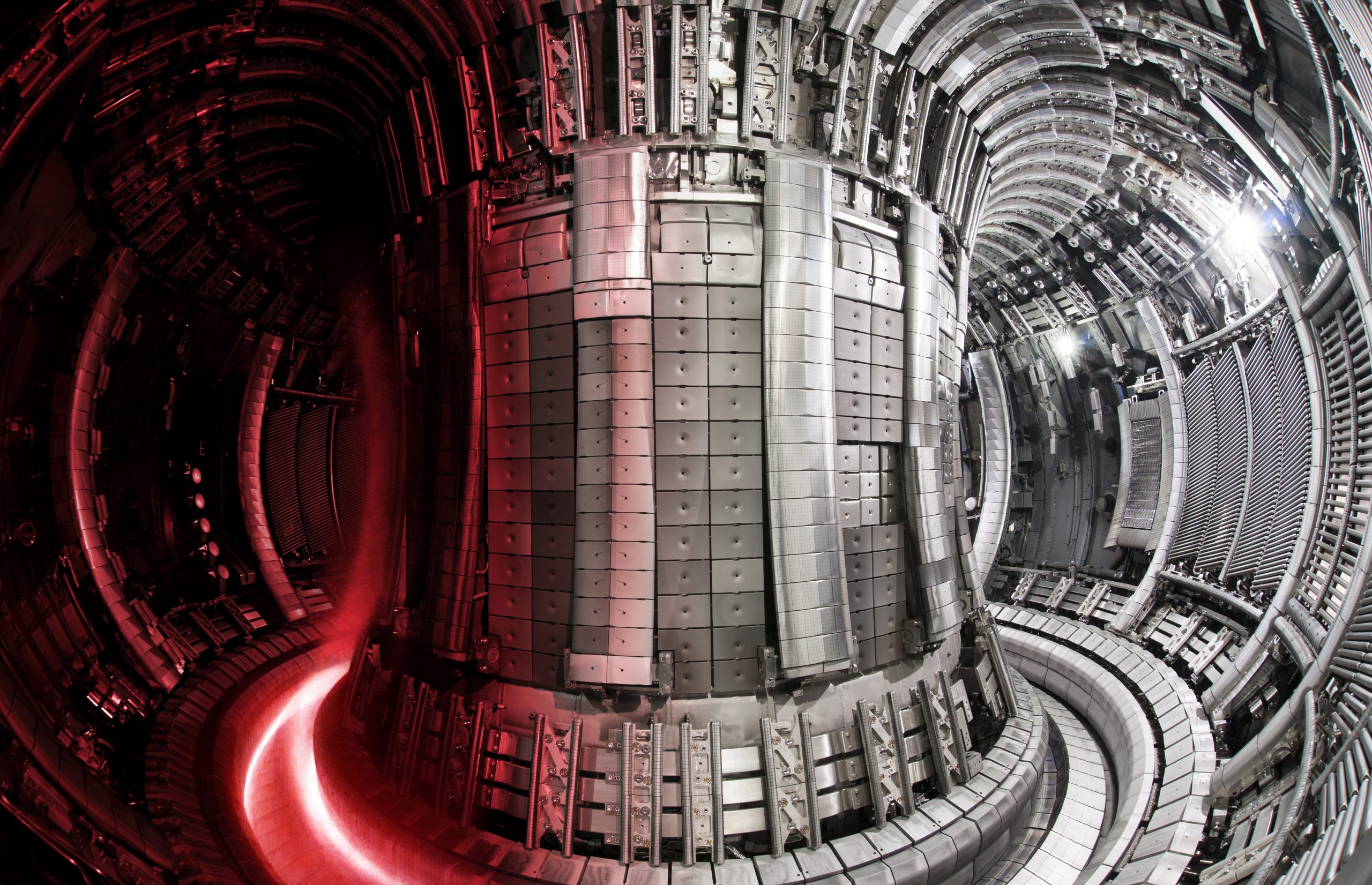
This strategic direction is most clearly embodied by the International Thermonuclear Experimental Reactor (ITER) project, a monumental collaboration among 33 nations. Located in Cadarache, France, ITER is a TOKAMAK, a magnetic fusion device designed to confine superheated plasma using magnetic fields. The reactor’s key goal is to operate a burning plasma, a state where the heat from the fusion reaction itself is sufficient to maintain the plasma’s temperature, thus reducing or eliminating the need for external heating. While ITER is not designed to produce commercial electricity, its mission is to achieve a tenfold return on power.
This can be measured in the so-called Q value. A Q value of 10 means that one is generating 500 megawatts of fusion power from 50 megawatts of input heating power. The unprecedented scale and cost of ITER underscore the global consensus on fusion’s importance, with the United States alone contributing over $2.9 billion between 2007 and 2023.The project’s success is not measured solely by scientific milestones but by its ability to validate the integrated technologies and operational protocols required for a future fusion energy industry.
The knowledge and technologies developed in pursuit of fusion energy also generate a positive feedback loop of innovation across a wide array of scientific and engineering disciplines. Beyond its energy potential, plasma research has far-reaching applications in fields such as astrophysics, where it helps us understand the physics of stellar bodies. In manufacturing, plasma etching is used in the fabrication of integrated circuits, while plasma can also be used to deposit thin films to harden or increase the corrosion resistance of surfaces. This interdisciplinary nature of plasma science means that innovations in materials designed to withstand the extreme environment of a fusion reactor could benefit other industries such as aerospace, material science and industrial process control. The existence of a dedicated research community, a robust international collaboration, and a clear link to climate change makes plasma and fusion research a central hub for advancement across multiple domains, each contributing to and benefiting from the others.
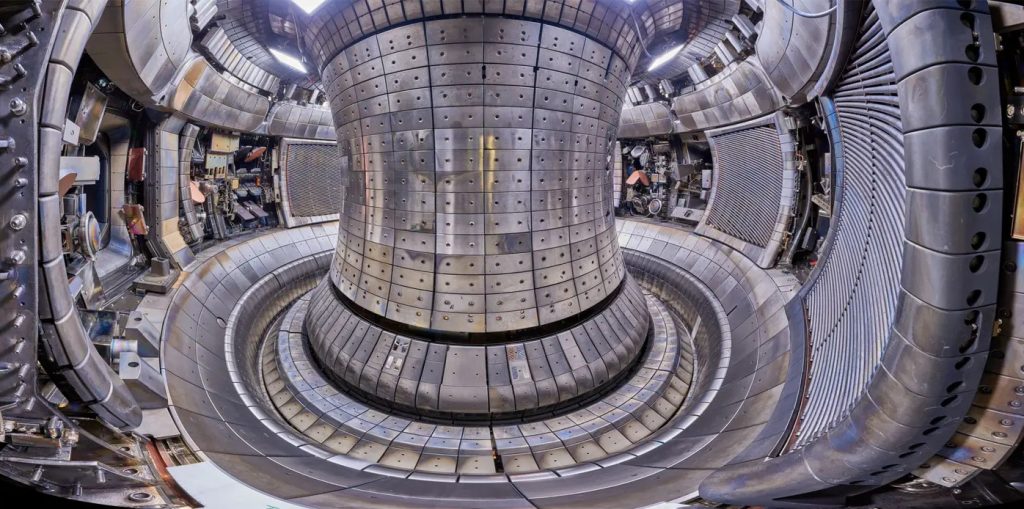
The Plasmachamber of the Asdex Upgrade. Deflection Plates of the Divertor visible towards the bottom of the image. © Volker Rohde
The Plasma-Wall Interaction Challenge
The successful operation of a fusion reactor centres on its ability to confine a plasma heated to temperatures exceeding 100 million degrees Celsius, far hotter than the core of the Sun. Since no physical container can withstand such conditions, reactors like TOKAMAKS rely on powerful magnetic fields to suspend the plasma within a vacuum vessel. However, this magnetic confinement is never perfectly closed, some plasma inevitably escapes and interacts with the reactor walls. This phenomenon, known as plasma wall interaction, represents one of the biggest challenges remaining in fusion research. It is a fundamental physical process with direct and severe consequences for reactor performance, safety, and long-term economic viability. The core of this challenge lies in an unavoidable trade-off: maintaining a high-performance plasma requires conditions that are inherently damaging to the reactor’s physical components.
This interaction creates a complex feedback loop of deterioration, which is difficult to control without comprehensive diagnostics. This is also where laser induced breakdown spectroscopy (LIBS) will play a vital role. The three primary detrimental effects are:
- Wall erosion by plasma: The constant bombardment of the reactor walls by high-energy plasma particles causes the gradual erosion of material. This can occur through physical sputtering, where plasma particles knock atoms out of the wall, or via chemical reactions. Furthermore, plasma instabilities known as disruptions can rapidly disperse the total stored plasma energy to the walls in a fraction of a second, causing local thermal heating that can melt or crack the wall components. This erosion shortens the operational lifetime of the plant and necessitates costly maintenance and material replacement.
- Introduction of Impurities: When material from the walls is eroded, it enters the plasma as an impurity. Unlike the light hydrogen atoms that make up the fuel, these impurities—which can include heavy elements like tungsten or molybdenum—are not completely ionised. The electrons still bound to these atoms radiate energy away as ultraviolet and X-radiation, effectively cooling the hot plasma. This cooling effect can significantly reduce the frequency of fusion reactions, thereby decreasing the fusion yield. The presence of these impurities undermines the very purpose of the reactor and contributes to the plasma instability, which can, in turn, lead to further erosive events.
- Fuel trapping in walls: One of the most critical safety and operational concerns is the retention of plasma fuel, particularly tritium, within the reactor walls. Tritium is a radioactive isotope, and its presence within the reactor vessel must be kept below a strict regulatory limit for safety. The porous nature of materials and the high-energy particle bombardment can cause tritium to become implanted and trapped in the wall surfaces, effectively removing it from the fusion fuel cycle. This not only depletes the available fuel but also creates a significant safety hazard that requires constant, precise monitoring.
It is clear that these challenges are interconnected and highlights the need for advanced diagnostic tools. For example, a minor erosive event can introduce impurities, which cool the plasma. A cooled plasma may become unstable, leading to a major disruption that melts or cracks the wall, introducing even more impurities and starting the cycle again. This self-driven cycle of degradation directly impacts the efficiency and economic success of a future fusion power plant. To solve this, scientists are focused on two key areas: optimising plasma properties at the wall’s edge and developing new materials that can withstand these extreme loads. This research, however, is entirely dependent on in-situ, real-time diagnostic systems that can provide precise, quantitative data on the state of the reactor’s interior. A summary is presented in the table below:
| Threat | Physical Mechanism | Consequence | Impact on Viability |
| Erosion | Physical sputtering, chemical reactions, and transient thermal loads from plasma disruptions. | Material loss from reactor components, melting, and cracking of walls. | Shortens plant lifetime and availability; increases maintenance costs; hinders economic success. |
| Impurities | Eroded wall material enters the plasma. | Plasma cooling due to energy radiation, reduced fusion yield. | Lowers overall plant efficiency and makes sustained fusion more difficult. |
| Fuel Retention | Implantation and trapping of tritium in wall materials. | Depletion of fusion fuel; accumulation of radioactive material. | Creates a safety hazard with regulatory limits; disrupts the fuel cycle and continuous operation. |
Laser-Induced Breakdown Spectroscopy (LIBS): A promising Diagnostic Technique
To address the multifaceted challenges of plasma-wall interaction, researchers require diagnostic tools that can operate in the hostile and inaccessible environment of a fusion reactor. Laser-Induced Breakdown Spectroscopy (LIBS) has emerged as a particularly promising solution due to its unique combination of capabilities. LIBS is a form of atomic emission spectroscopy that leverages a highly energetic, short laser pulse as an excitation source. When this laser is focused onto a sample surface, it ablates a tiny quantity of material, creating a micro-plasma. As this plasma cools, the excited atoms and ions within it emit light at discrete, characteristic wavelengths. The emitted light is then collected and analysed by a high-resolution spectrometer (such as the LTB Aryelle spectrometer series), and because each chemical element possesses a unique spectral signature, the material’s elemental composition can be rapidly and accurately determined. In addition, the ability to measure and detect contactless at a distance and also the benefit of not requiring extensive sample preparation helps for this particular application.
The true power of LIBS for fusion applications lies not just in its ability to identify elements but in its capacity to provide a complete “digital fingerprint” of the material state. The data from a LIBS measurement can be used to calculate plasma parameters such as temperature and electron density, which are essential for understanding the repeatability and stability of the measurement itself. Furthermore, by ablating the sample with a series of successive laser pulses, LIBS can perform a compositional depth profile analysis, allowing researchers to map the elemental composition layer by layer. This can transform LIBS from a simple surface analysis tool into a powerful three-dimensional diagnostic that can reveal critical information about the diffusion and mass transfer processes occurring in the reactor components. This detailed, multi-layered data is essential for validating the physical models used to predict impurity transport and for informing the selection of new, more resilient materials for future reactors.
The advantages of LIBS are not mere conveniences; they can be seen as are essential requirements for the safe and effective operation of a fusion device. The interior of a TOKAMAK is a hazardous environment, subject to intense heat and radioactivity that make human access almost impossible. LIBS offers a solution because it can be conducted remotely, from safe distances. This remote capability is an important feature that allows LIBS to be deployed on robotic remote handling systems to perform in-situ analysis within the ITER vessel, for instance, during shut-down phases for maintenance. Again, LTB has developed a solution, the CMH-66 LIBS scan head, designed for harsh environments, which can even be mounted on a robotic arm. Furthermore, the technique requires little-to-no sample preparation, making it an ideal choice for the on-the-spot analysis required for real-time monitoring. This capability to act as both eyes and hands inside a plasma reactor, positions LIBS not just as a research tool but as a crucial component of a reactor’s operational and safety systems.
LIBS has already proven its value in specific, high-profile plasma and fusion applications. It is considered the most promising method for the quantitative, in-situ determination of fusion fuel retention, particularly tritium, in most plasma-facing components. For example, the technique can be used to identify the location and quantify the content of tritium in co-deposits within the ITER vessel. Beyond fuel retention, LIBS is instrumental for monitoring the surface elemental composition of the first wall, especially in the divertor region, which is subject to the highest heat and particle loads. This real-time data is critical for understanding the dynamic processes of plasma wall interactions, which is a key requirement for the successful long-term operation of a fusion power plant.
The LTB/ARYELLE Spectrometer: The High-Resolution solution of plasma fusion diagnostics
While the laser pulse is the initiator of the LIBS process, the spectrometer is its analytical heart. To perform the mission-critical diagnostics required for fusion research, the spectrometer must be able to meet a demanding set of requirements: high spectral resolution to distinguish between closely spaced elemental lines, a broad wavelength range to detect a wide variety of potential impurities, and the robustness to operate reliably in a challenging environment. The LTB/ARYELLE series of spectrometers, a flagship product from LTB Lasertechnik Berlin, is an instrument specifically designed to meet these exacting specifications. Its unique echelle grating optical design provides a powerful solution to the inherent trade-offs faced by conventional Czerny-Turner spectrometers.
The ARYELLE operates on the principle of echelle spectroscopy, which uses two dispersive elements: an echelle grating and a prism.Unlike a conventional spectrometer that separates light in a single dimension, this arrangement diffracts light into a multitude of high interference orders and then uses a prism to separate these orders in a cross-dispersion direction. This creates a two-dimensional image of the spectrum on the detector, enabling the simultaneous detection of a large wavelength range while maintaining extremely high spectral resolution. This optical design is essential for plasma and fusion diagnostics, as it allows a single measurement to capture the spectral signatures of a vast range of elements—from light impurities like lithium to heavy metals like tungsten—without the need for multiple instruments or sequential measurements.
The engineering of the ARYELLE spectrometer also demonstrates a critical transition in diagnostic tool design, moving from fragile laboratory instruments to rugged, reliable systems (see LTB CMH-66) suitable for demanding, real-world applications. The optical and mechanical design can be described as compact, thermally and mechanically stable, making it very well-suited for industrial process control, and by extension, for the harsh environment of a fusion reactor. The instrument’s design also incorporates reflection optics with broad-band UV coatings, which avoids chromatic aberrations and allows for a flexible selection of measurement wavelengths without limitation.
The ARYELLE’s technical specifications are directly tailored to the needs of LIBS in plasma research and fusion context. Besides the brad spectra range, it offers a very high spectral resolving power of up to 50,000, which is crucial for accurately identifying and quantifying impurities. The flexibility to use different detectors, such as a CCD with a chopper for a better signal-to-noise ratio or an ICCD for superior time resolution, allows researchers to optimise the system for specific, transient phenomena like plasma disruptions or rapid plasma evolution. Furthermore, its automatic, user-independent calibration system ensures consistent, accurate data acquisition without the need for human intervention in a largely inaccessible environment. The use of the ARYELLE series in a range of peer-reviewed studies—from geological analysis to the investigation of titanium alloys—provides significant third-party validation and establishes its standing as a standard-bearer for precision LIBS in high-stakes scientific applications. A short summary is presented in the table below:
| Feature | Technical Specification | Significance for Fusion Diagnostics |
| Spectral Resolution | Resolving power up to 50,000; up to 30,000 in the VUV range (175-330 nm) and 15,000 in the UV-VIS-NIR range (330-850 nm). | Enables the separation of closely spaced spectral lines, allowing for the accurate identification of a wide range of impurities. |
| Wavelength Range | Large simultaneous range; available for 175-330 nm (VUV-UV) and 330-850 nm (UV-VIS-NIR). | Allows for the simultaneous detection of a wide variety of elements, from light fusion fuel isotopes to heavy metals from reactor walls. |
| Optical Design | Echelle grating and prism for 2D spectral image; reflection optics to avoid chromatic aberrations. | Provides an ideal balance of high resolution and broad wavelength coverage in a single measurement. |
| Stability | Thermally and mechanically extremely stable setup. | Ensures reliable and consistent performance in the demanding, non-laboratory environment of a fusion reactor. |
| Detector Flexibility | Compatible with various CCD and ICCD cameras. | Allows customisation for specific research needs, such as a better signal-to-noise ratio for quantitative analysis or a better time resolution for transient events. |
| Calibration | Automatic, user-independent calibration using a mercury lamp. | Reduces the need for human intervention in inaccessible and hazardous environments. |
Recommendations and Strategic Outlook
The global plasma physics and fusion research community has made impressive progress in solving many fundamental questions related to fusion and plasma physics phenomena. However, the path to a commercially viable fusion power plant still needs to overcome complex engineering challenges, a large part of which is at the interface between the superheated plasma and the physical walls of the reactor vessel. The future success of fusion energy is thus inextricably linked to the continued development and implementation of advanced diagnostic systems inside the reactor chamber.
While LIBS already works very well in controlled lab-based plasma physics setups, there is still a clear need to further optimise LIBS systems for the specific and stringent requirements of the fusion environment. LIBS has already proven its capabilities. There are advancements in multi-pulse techniques, such as dual-pulse LIBS, which can significantly improve signal stability and signal clarity. This is particularly important for distinguishing between key spectral lines, for example those of deuterium Dα and hydrogen Hα, which are critical for fuel retention measurements. The development of standardised and reproducible quantitative analysis methods, such as the calibration-free LIBS (CF-LIBS) technique, could also be essential for ensuring the accuracy and reliability required for a commercial-scale power plants and fast in-depth material analysis.
The data provided by high-resolution instruments like the LTB/ARYELLE or CMH-66 spectrometers is not only for observation of plasma phenomena, it is helping to make informed design and selection choices of future reactor components. The ability of LIBS to perform depth profiling provides invaluable data on how materials degrade and how tritium is retained in the walls This knowledge is a direct input for materials and plasma scientists working to develop new materials that can withstand the intense neutron irradiation and extreme heat fluxes expected in next-generation plasma fusion reactors. Therefore, the continued innovation in diagnostic instrumentation is not just a parallel effort but a prerequisite for the advancement of materials science and reactor engineering itself. The data from diagnostics feed in the physical models, which in turn guide the engineering solutions.
In conclusion, the journey toward a sustainable fusion energy future is a complex, multi-faceted endeavour that involves fundamental physics, cutting-edge engineering, and rigorous safety protocols. While the promise of clean, abundant energy is the primary motivator, the successful realisation of this goal is depending on overcoming many technical challenges. The plasma-wall interaction is arguably the most critical of these challenges, as it is threatening both the efficiency and safety of a future power plant. Laser-Induced Breakdown Spectroscopy (LIBS), powered by high-resolution echelle spectrometers like the LTB/ARYELLE, provides a vital, and in many cases, indispensable diagnostic solution of the fusion scientists. The successful integration of these advanced diagnostics technologies will be a key factor of whether fusion energy becomes a cornerstone of our planet’s energy generation infrastructure.